Hey! Hallie here!
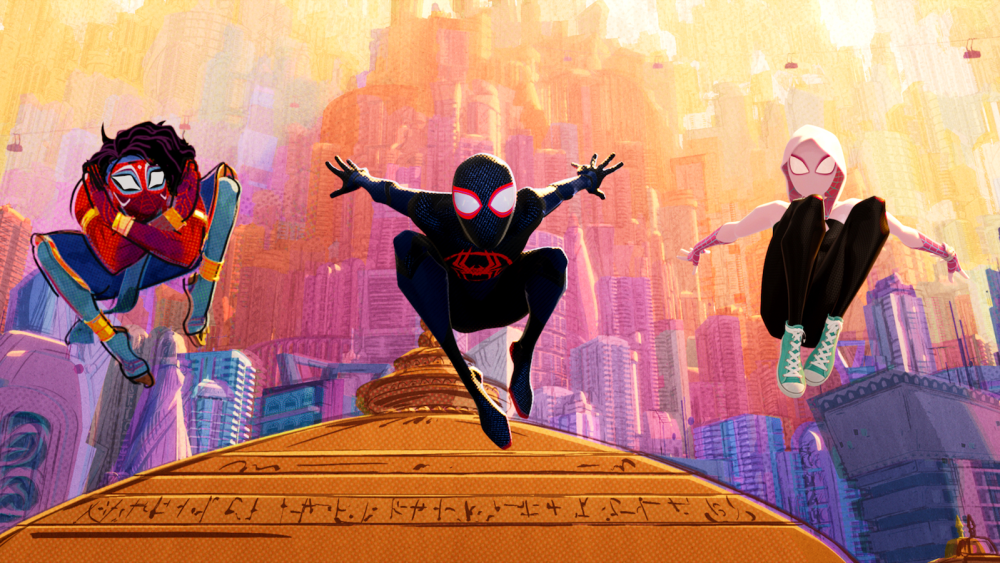
At this point pretty much everyone’s seen ‘Spider-Man: Across the Spider-Verse’. It’s by far one of the best movies of the century and one of the best animated projects I’ve ever seen in my life, so if you haven’t seen it, you need to go out and see it immediately. I was skeptical when others said this was better than the first movie, but it really is. Plus, the art in this movie alone is worth the price of admission. Moving past all that though, it’s long past time that I do a deep dive on this movie. This won’t be a review because, let’s be real, I have only positive things to say here and I think I would run out of compliments, but I really want to talk about the characters in ‘Across the Spider-Verse’. We have a lot of them this time around, even more than we had in the first movie, and there’s surprisingly deep storylines for each of the characters we get the most focus on. There’s also a lot of imagery and theming within each of the main characters. So let’s look at their motivations and where that leads them from the beginning to the end of the film. SPOILERS AHEAD!
Miles Morales: Miles probably has the most obvious imagery in his character arc. On the surface we see a fifteen-year-old kid who, despite his age, is a very capable Spider-Man. But with both his parents and the main group of Spider-People in this movie, Miles never feels like he’s being taken seriously. He doesn’t feel like his parents have enough faith in him to pursue the things he wants to pursue, and he feels even more frustrated when Gwen reveals that he’s one of the only Spider-Men who hasn’t been invited into Miguel’s task force. But though Miles proves himself as one of the most skilled Spider-People by the end of the movie, there’s much more to his story. Most importantly, the cake metaphor. At the beginning of the movie, when Miles is meeting up with his college counselor, she mentions that he can’t have his cake and eat it too. His response is a quippy “not if you have two cakes”, but later we see him juggling two literal cakes for his dad’s party. By stopping to be Spider-Man while trying to deliver the cakes to his family, he winds up ruining them both. This one is a pretty obvious metaphor for the way Miles is attempting to unsuccessfully juggle his personal life with his Spider-Man life. You could argue this theme makes Miguel right when he tries to take Miles down. Miles must make more sacrifices in his personal life if he’s meant to be a good Spider-Man. But I don’t think that’s what the movie’s saying at all. After all, a large emphasis is also put on Rio Morales telling Miles that while he can go out and explore the world, at the end of the day he has an obligation to take care of his personal responsibilities. In other words, Miles’ obligation to his family, and ultimately his obligation to save his father, is too important to be sacrificed for Miles’ superhero work. So what is the solution? Well, given the amount of Spider-People he’s befriended, maybe it’s not putting so much pressure on yourself and asking for help. But I think the resolution for this will have to wait until the next movie.
Miguel O’Hara: Let’s take a look at Miguel because his character arc seems to be mostly used in order to complete Miles’ arc. Miguel has taken it upon himself to fix every single anomaly he sees in the multiverse, maintaining a “canon” for Spider-Man specifically so that various universes don’t disappear like the universe he attempted to inhabit. First off, I do think it’s important to note that the canon Miguel is attempting to maintain is broken by Miles Morales’ existence, which is a very important acknowledgment of the awful fans who attempt to discredit Miles for not being enough like a classic Spider-Man. That aside, Miguel’s ideas on universes disappearing forever due to anomalies is constantly disproven in front of his face. While the Spot was created due to the events that happened after Miles was bitten, Miles is not responsible for the Spot’s actions, and Miles existing as Spider-Man has not lead to any disappearances like what Miguel experienced. There’s also Mayday, a direct consequence of Peter B. Parker training Miles, which wasn’t supposed to happen. Mayday, similarly, has not lead to any disappearing events. So what could have caused the tragedy that happened to Miguel? Most likely the fact that Miguel chose to stay in a different universe and permanently infringe upon it. And if we look at Miles’s storyline hinging on Rio’s idea that ultimately it’s your responsibility to come back home and take care of your personal life, it does seem like Miguel’s mistake was not going back home and taking care of his personal problems. I also think that Miguel’s insistence on being solitary could be a big hint that having other people to rely on solves the big cake problem in Miles’ character arc, but we’ll have to see.
Pavitr Prabhakar: Quick shout out to Pavitr for his short character arc being more possible proof that my “relying on other people” theory is correct. Pavitr has a heartbreaking moment where he actually says the words “I can do both” when he’s trying to save Gayatri and Inspector Singh at the same time. This is supposed to be his canon event, where Inspector Singh dies and carries on a tradition of majorly traumatic and impactful deaths in Spider-Man’s storyline. Except Miles prevents this by taking some of the pressure off of Pavitr’s shoulders and saving Inspector Singh himself. So thanks Pavitr, and also thank you for being adorable and having the most gorgeous Spider-Man design I could have possibly imagined.
Gwen Stacy: The discussion of this character arc has lead to a lot of in-fighting amongst ‘Across the Spider-Verse’ fans, meaning there’s a lot more work that needs to be done to fully understand this one. The first step to understanding this storyline is knowing that it’s a story of failure. Gwen tells us this herself. She failed Miles and she knows it. Gwen starts out the movie missing Miles a whole lot, and it’s because she isolates herself due to trauma. She had to kill her universe’s Peter Parker, her best friend, because in an endeavor to be as “special” as her, he turned himself into the Lizard. As a result she’s hostile towards her band and then quits, is short with her father, and has made no friends since Miles. The only thing she really cares about is being Spider-Woman, and her dad rejecting her once he realizes she’s Spider-Woman only further pushes her in that direction. Which is why meeting Miguel and Jessica so immediately impacts her. Suddenly she has a mentor in Jessica, and a whole group of Spider-People she can befriend without having to care at all about her personal life. But she essentially has to sacrifice Miles in order to have all of this. She knows that Miles is considered an anomaly, an enemy of everything Miguel’s working for. She also knowingly supports a system that would see Miles’ father dead, and does not support Miles when he rejects that system until it’s too late. So yes, she’s understandable, but she also made the selfish decision to let Miles suffer for an escape from her personal life. She even selfishly decided to reunite with him so she could have her friend back, and then attempted to distance herself from him again so she wouldn’t have to be the one to hurt him. But she’s learning, and that’s also important. At the end of the movie she goes back to her universe and reconciles with her father, no longer avoiding her personal life. She’s also actively leading a group with the sole intention of helping Miles. But she does have a lot to make up for in the next movie.
Hobie Brown: Hobie’s the big wild card in ‘Across the Spiderverse’. While his status as an anti-capitalist, anti-conforming, anarchist punk is used jokingly in some scenes, the narrative tends to agree with him. Which is why Hobie Brown ends up being one of the best characters in the entire movie. He’s the first person to warn Miles that he should be cautious of Miguel and his task force, and is openly disapproving that Gwen hasn’t told Miles that his mere existence is a problem to Miguel. He also stands by Miles throughout his entire time on screen. He gives him advice on his new energy blasting trick when he first meets him, reminds him that he has good parents, helps Miles escape Miguel, and then quits immediately after Miles gets away. Hobie is praised by the narrative both for questioning authority and for being loyal not to establishments, but to individuals like Miles. Even his thievery of Miguel’s tech is supported by the plot when he manages to replicate a universe hopping watch for Gwen in the hopes that she’ll quit like he did. And, naturally, he’s part of Gwen’s team at the end of the movie. Hobie’s such a badass and I’m really glad the movie praises his ability to point out problematic systems.
And that’s all I have for ‘Across The Spider-Verse’. There’s a lot going on in this movie, but the depth to all of it is one of the things that makes it such a masterpiece. And the depth to the animation is also a major player here. The animation isn’t just gorgeous, but the little details like the guiding lines on Miguel’s face, or the onomatopoeia bubbles being in different languages, really prove how much love and devotion went into each frame. Which is why I’m happy the next movie will likely get pushed back a year or so. The animators are excellent, but they were worked way too hard on this movie. I can’t wait for the next one, but I really want them to take their time with it so the animators can enjoy making it just as much as we enjoy watching it.
Don’t do anything fun until I get back!
Hallie
 Oreos & Peanut Butter