Hey! Hallie here!
I’ve been reading a lot more lately as a distraction from all the things I’m dying (absolutely DYING) to write about while attempting to avoid discussing struck works in support of SAG and the WGA. Among the books I’ve revisited are the ‘Monk & Robot’ series by Becky Chambers. These are two novellas, meaning each are only about 150 pages, entitled ‘A Psalm for the Wild Built’ and ‘A Prayer for the Crown Shy’. Both Sci-Fi books use a cozy atmosphere and two very wholesome characters to discuss things like the importance of nature and the meaning of life. This series is the epitome of cozy fantasy, but even more than that, I found them so incredibly healing when I first read them that I cried. So naturally, I want to convince as many people as possible to give this series a shot by talking about all the things I love about them! I’m keeping this post completely spoiler free as well, so you can hopefully go into these books with the same amount of wonder I did.
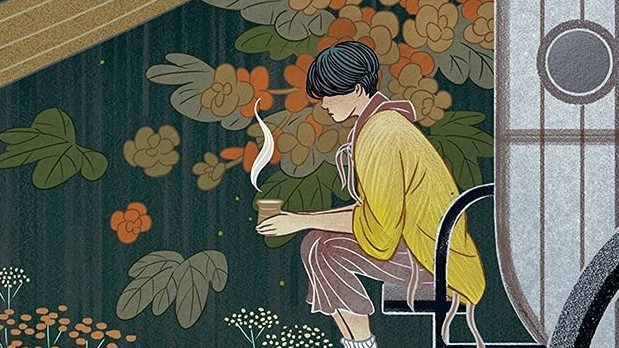
Summary: A non-binary monk referred to as Sibling Dex lives in Panga, an alternate version of Earth where humans have put behind their dependence on technology, money, and worker exploitation in order to live in a society reliant on being one with nature. Due to restlessness, Sibling Dex has recently taken up the mantle of tea monk, a type of monk who travels Panga and listens to the problems of the overwhelmed while finding the perfect brew of tea to ease their troubles. But when even the travel doesn’t ease their restlessness, they head off the beaten path and come face-to-face with a robot named Mosscap. The problem? The robots left humanity behind long ago to live out in the wilder forests and haven’t been in contact since. But according to Mosscap, the robots want to get back in contact with humans in an effort to answer one question. What do humans need? It soon becomes clear the answer to that question is very complicated.
The Characters: As you could tell from the title of the series, the books really surround the characters of Sibling Dex and Mosscap. While you meet other very pleasant characters on their journeys through Panga, the relationship between these two characters and their distinct views on life are what make the series. Sibling Dex is easy to relate to. They experience a very relatable case of burnout throughout both books, and you can’t help but sympathize with both their constant exhaustion and their constant disappointment in themselves for not living up to their own expectations. Their story is cathartic, and made even better when it’s seen through a character who has a satisfying level of sarcasm, frankness, and genuine kindness. On the other side is Mosscap, who combats some of Dex’s pessimism with wide-eyed curiosity and undeniable sweetness. Mosscap experiences its own insecurities, but the way it finds joy in every-day things and appreciates them for what they are rather than what they could be, makes the character healing simply because we get to see the world through its eyes. (Also note the very loving use of it/its pronouns for Mosscap. I absolutely adore it.) The two characters take turns being teachers for one another throughout the books in a way that allows each one to develop into the best versions of themselves. While Dex struggles with their view of themselves, their love for other people and other points of view allows Mosscap to see the loveliness in the complexities of humanity. Meanwhile, Mosscap’s general naiveté doesn’t prevent it from teaching Dex not to define importance by apparent usefulness. I learned so much from each character and I won’t forget those lessons anytime soon.
Solarpunk: These books are actually one of the best examples of Solarpunk I’ve ever read, but I don’t think a lot of people know what Solarpunk is. Most people are familiar with Steampunk, a Sci-Fi genre that incorporates 1800s steam-powered machinery with modern technology to create an alternate version of reality that takes heavy influences from the Victorian era. Solarpunk challenges the unsustainable nature of a steam-powered society by instead imagining an alternate reality where humanity embraced nature and made an effort to create sustainable technology. This series is one of the best things you could read to introduce yourself to this hopeful genre. The world of Panga is full of nature, whether it’s the bustling cities full of plants growing across large buildings and giant wind turbines, or the small villages that boast wooden cottages built into trees and clearings dedicated to trading necessities. There are solar farms alongside regular farms in some areas, means of collecting rain for drinking water in others, and even areas where people refuse to use any technology or electricity at all. The people who live in Panga (who do use technology) tend to have mobile phones as a means of contacting those they love, but also as a means of trading currency with each other. But that currency isn’t money. It’s acts that benefit society. If you “buy” food from a vendor, you simply pay it back by contributing in your own way to society. The mobile phones are used to tally how many acts you have done that can be traded for things you need. And if someone fails to benefit their community? Well, they’re merely checked up on and helped by their neighbors. It’s truly idyllic, and it makes Panga the perfect world to escape into when I’m stressed.
The Robot Analogy: Within this series there’s a plot thread that’s been played with a lot recently by Sci-Fi writers. This involves humanities creation of, and subsequent exploitation of, robots. In ‘A Psalm for the Wild Built’ it’s revealed right when you open the book that one of the main catalysts for humanity deciding to create a Solarpunk society was the robots closing down factories by refusing to work, and then going to live in the wilderness. The problem with this in a lot media (*cough* ‘Detroit Become Human *cough*) is that robot exploitation is often used as a poor analogy for slavery. And of course, all of it’s being written by white writers. That isn’t the analogy this book uses, fortunately. Instead, the book clarifies that humans see robots gaining sentience as a work of their gods to help society. Some do believe robots should be classified as constructs or tools, but should be respected as one respects necessities. Others believe robots should be identified as organic, like humans, because they gained sentience. And some believe that robots are neither and gained sentience because humanity had chosen ease over giving jobs to those who needed it, and their gods decided to rectify that mistake. It’s a really interesting look at not only humanity grappling with their own egos in a situation they couldn’t control, but also the modern-day problems we have with technology taking over human jobs. And all of it’s wrapped up in the main narrative here: Worker exploitation. The book makes clear that robots left humanity because they were overworked and undervalued, which we see in so many professions today. It’s really refreshing to see this plot line used for good.
I’ll leave this here so I don’t keep rambling about how much I love these books. I absolutely adore the ‘Monk & Robot’ series. The characters are deeply relatable and their discussions give me more hope for humanity than anything else I’ve ever read. Crying during these books isn’t a result of sad moments, it’s a result of catharsis. Becky Chambers made me feel seen and accepted just as I am. And she also made me believe that humans do have the capacity to care for the nature and the other people around them. Not every story makes you want to change the world, but this one does. And even more importantly, not every story makes you feel valid for just being yourself, but this one does that too. These books had an extremely positive impact on my life, and I hope they’ll affect you in the same way.
Don’t do anything fun until I get back!
Hallie
 Oreos & Peanut Butter