Twins in Media: Luke and Leia

Screenshot from “Star Wars: Episode IV- A New Hope” featuring Carrie Fisher and Mark Hamill. Copyright of Lucasfilm Limited.

Hey! Hallie here!

We’re back around to our weekly “Twins in Media” posts and starting out with a really popular representation of twins. Luke and Leia are probably the most popular twins in media right now. What’s funny about them, though, is most people don’t really think about the fact that they’re twins other than to comment on how gross the kiss was. (Very.) There’s a debate on whether or not their status as twins was planned from the beginning, or thrown in later to prevent fans from liking Leia with Luke more than Leia with Han. I’ll weigh in on that in a second because it’s absolutely crucial to this analysis. Still, there’s no denying that Lucas has since doubled down on the twin label. So let’s start unpacking some of these tropes and see how well these two fare.

The Dark Side:

  • Separated at birth. Wow this trope comes up a lot. Luke and Leia are basically the definition of this trope. Leia lived as royalty on Alderaan while Luke lived as a farmer on Tatooine. Leia spent her teenage years serving as a diplomat for her planet while Luke went to Tosche Station to pick up power converters. There isn’t really any similarities between them. I’ve mentioned my love/hate relationship with this trope before. While it allows twin characters to be two very different people, it usually falls under one of two extremes. Either the twins have too much in common because “fate”, or the twins have absolutely nothing in common to demonstrate how different they are. Leia and Luke could do with having more in common than just the Force. Real siblings have some likes, dislikes, and traits in common while maintaining their individuality, and twins are no different.
  • Twin telepathy. Okay, this one is a bit complicated. When Leia and Luke discover that they’re related, their Force connection becomes way stronger than it was in the first two movies. This could be seen as twin telepathy, which is absolutely a harmful trope. It furthers the idea that twins are single minded and that they share the same thoughts and ideas. The amount of times I fight with my sister would prove otherwise. However, it should be noted that Leia could feel Luke’s presence at the end of “Empire Strikes Back”, before they were confirmed to be twins, and a lot of their abilities seem to be more of a demonstration of the Force rather than a commentary on twins. So this is absolutely a loose addition to this list.
  • Twincest. Let’s all take a moment to gag at the kiss that happens in “Empire Strikes Back”. It will come up again later, I assure you. Done? Ok. Let’s move on.

The Light Side:

  • Different lives. This is all of the good that comes from their separation. They have different adoptive families which they had very different relationships with. (Before they all died, that is.) They have the same friends but they have different relationships with them. It’s kind of nice to see these two trapped in a scenario where they’re devoting their lives for the same cause. It forces them to stick together, to go through many of the same experiences, and still demonstrate how different they are and their separate goals within the Rebel Alliance.
  • The separate actors. Mark Hamill and Carrie Fisher look nothing alike. That still makes them a more realistic representation of twins than Lindsay Lohan in “The Parent Trap”. Why? Because, even if it’s difficult to notice, all forms of twins differ in appearance. One actor playing two roles doesn’t allow for differences. Some twins do look nothing alike. Especially fraternal twins, which Luke and Leia most definitely are. The fact that they cast these roles as individuals rather than as twins makes me appreciate these very different actors in these roles. Even though it’s likely no one, including George Lucas, knew that Luke and Leia were going to be twins when they were casting.
  • The overall lack of preparation. Here we go. This is the conversation we really need to have about these two. I am of the opinion that Luke and Leia being twins was a late addition to the story. Given how they were portrayed, I don’t think it was planned from the beginning. There was not even slight hinting that the two were siblings during the first half of the original trilogy. Not to mention the kiss in “Empire Strikes Back”, which I would really like to believe was written without their status as siblings in mind. The first possible hint we get is at the end of “Empire Strikes Back”, when Leia senses Luke is in danger and is able to help Lando navigate the Millennium Falcon underneath him to rescue him. I think it could be argued that this scene was only meant to demonstrate her Force ability and nothing more. After all, we do get Yoda hinting that there is another potential Jedi they can count on if Luke fails, which is later revealed to be Leia. We can go back and forth on whether or not Leia having the Force in the first place shows that she’s related to Luke, but my point is there was no written preparation or hinting in the first half of their story that these two were related. So why did I put this total lack of preparation as a positive? Because the narrative built them up as individuals before the twin reveal. They were written as separate, fully-fleshed out characters, making them stronger as siblings. That’s why there are hardly any tropes to be spoken of here. A lack of stereotypes and tropes is always a good thing in my book.

So are they a good representation of twins?

I’d say so! They’re twins who are portrayed as normal siblings. They have separate likes and dislikes. They live different lives even though they have some similar goals and friends. However, I would like to point something major out. Twins should be written this way on purpose, not simply on accident. I want to see twins who are twins from the beginning and are still separate characters. Luke and Leia are great, but they almost don’t feel like twins at all. The Force is really all that connects them and it would be nice to see twins in media who are connected by much more and are still different. But I digress. Anyway, I’m a huge fan of these two and I hope some of the things they accomplish can help twin representation become even better in the future.

Don’t do anything fun until I get back!

Hallie
Book Adaptations: Little Women

Screenshot from ‘Little Women’ (2019) starring (from left) Emma Watson, Florence Pugh, Saoirse Ronan, and Eliza Scanlen. Copyright of Columbia Pictures.

Hi! It’s Annie!

If you haven’t figured it out by now, I’m definitely a classic literature fan. ‘Little Women’ was one of those books that I would just pick up for fun as a kid because, even if I forgot a book and was staying at a relative’s house, they would always have a copy of ‘Little Women’ by Louisa May Alcott for me to read. I didn’t quite understand just how impactful this book was for many of my friends too until I heard someone call themselves a Jo girl, and then my perspective on this novel changed. Just like ‘Pride and Prejudice’ by Jane Austen, this novel was ahead of it’s time in the depiction of women as they really think and act, rather than how men have always written us to think and act. This was one of the only books on my school reading lists that meant something to me and changed me, and it’s like that for many of the women that I know too. This novel was one of the starting points that made me start to consider how women are portrayed in media. For this too I have seen multiple adaptations, and hopefully I’ll be able to provide some insight on what adaptations to watch and what adaptations are better to skip.

Little Women (1933):

Katherine Hepburn stars as Jo in this version of ‘Little Women’ and, as much as I love Katherine Hepburn, there is really nothing memorable about this adaptation. It focuses so much on Jo that the other sisters feel very sidelined and nobody in this movie feels well cast. Jo is here to be pretty instead of smart and all the other girls feel like they fill similar roles. This one isn’t that worth watching.

Little Women (1949):

This movie adaptation is probably most known for starring the late, great, Elizabeth Taylor as Amy March. There is nothing inherently wrong with this portrayal of ‘Little Women’. It sticks pretty close to the book and leaves out what most film portrayals leave out because of only having so much time. So, why is this one of the worst film adaptations of ‘Little Women’? It’s entirely to do with old Hollywood acting and romance styles. None of the girls really feel spunky or fiery (though they try to make them that), they are all portrayed how Hollywood portrayed women at the time. The biggest example of this, and probably the most painful to watch in this movie, is Jo. This version of Jo is nothing like the Jo you’ve read about and fallen in love with. The best way I can describe this is by saying her character is very watered down. Where Jo normally gets angry in the novel, she cries instead in this version. It almost feels as if they were trying to make the character more palatable for male audiences. This isn’t a horrible movie by any means, but it hurts so much to see Jo portrayed like this.

Little Women (1994):

This is one of the best adaptations of the novel. Before the 2019 version came out, this was THE version of ‘Little Women’ to watch. This stars Winona Ryder as Jo, and she is definitely one the best actresses to play the character. Jo does not feel here as though she is watered down or a caricature of a “fiery woman”. She is a real life human being and exactly the character you fell in love with. Christian Bale is also in this movie as a very charming Laurie. Everything you felt was important in the novel is in here and the girls are all themselves. Also, the chemistry between the sisters in this movie is excellent and only makes the movie feel so much more believable. This is among the must-watches when it comes to adaptations of the classic novel.

Little Women PBS Series (2018):

If you liked Maya Hawke as Robin in ‘Stranger Things’, you will love her here as Jo. This PBS series is incredibly well-cast and the most detailed and close to the novel of the adaptations out there. Partly because this is a series instead of just one singular movie. The only place that this version of ‘Little Women’ does suffer, is actually how close it is to the book. Many of the adaptations to come out more recently change a few things about the book or the sisters to make it somewhat more relatable and modern. This does not do any of that. Despite this feeling less modern, you might appreciate that it stays so close to the novel. That’s entirely up to you, but it is worth a watch if you can get access to it. If not, there are better adaptations to watch.

Little Women (2018):

DON’T. This incredibly bad adaptation starring Lea Thompson and Sarah Davenport is a modern retelling of ‘Little Women’ apparently for a modern audience. I generally find modern adaptations of novels like this to be pretty bad with only a few exceptions. (One of them can be found in my ‘Pride and Prejudice’ adaptation post.) This movie is definitely not an exception to this. None of the characters feel true to the original novel, the sisters have no chemistry to the point where you wonder if the cast ever bonded on set, and the sheer amount of out-of-character moments in this movie is horrifying. In the confession scene between Jo and Laurie in this movie, Laurie non-consensually kisses Jo after she has already rejected him. If you ever wondered if there would be any version of the story to make charming Laurie completely dislikable, this movie is your answer. This movie advertises that it is for a modern audience, but tries to force you to like a character who non-consensually kisses the main character. How modern! This was created in 2018. Do yourself a favor and skip it.

Little Women (2019):

Please forgive me as I rant about what is by far the best adaptation on this list. This was directed by Greta Gerwig (A female director! Yay!) and is just the right mix of modern ideas and the original work. This is the version that Louisa May Alcott would love, but I’ll get more into that later. Saoirse Ronan is an inspiring version of Jo that represents what we all loved about the character while also providing an amazing insight into the mind of a modern woman. However, the stand out of this movie may just be Florence Pugh as Amy. If you were anything like me, you didn’t like Amy when you first read the book. I’ve always been very into writing, and when Amy burned Jo’s manuscripts I could not help but be angry right there with Jo. Amy is completely likable in this version and even one of the best characters. Not only that, but this movie leaves it up to your imagination if Jo ended up married or not. This is important because Louisa May Alcott never wanted Jo to be married. The book was written based off of her and her sisters, she was Jo, and she was not interested in men. Evidence suggests that Alcott was actually more interested in women. She was forced to marry Jo off in the books to make them more “publishable” and she absolutely refused to marry Jo off to her best friend Laurie, hence Bhaer. This movie keeps true to what Alcott originally wanted. I personally believe that this movie is one of the best for female representation in media in general. Everyone should watch this movie at least once. Lines such as;

“Women, they have minds, and they have souls, as well as just hearts. And they’ve got ambition, and they’ve got talent, as well as just beauty. And I’m so sick of people saying that love is just all a woman is fit for. I’m so sick of it! But I’m so lonely.”-Jo

and

“I’m just a woman. And as a woman, there’s no way for me to make my own money. Not enough to earn a living or to support my family, and if I had my own money, which I don’t, that money would belong to my husband the moment we got married. And if we had children they would be his, not mine. They would be his property, so don’t sit there and tell me that marriage isn’t an economic proposition, because it is. It may not be for you, but it most certainly is for me.”-Amy

are so incredibly relatable and heartbreaking that I cried several times in this movie.

If you want to see a good version of the novel or even if you want to see a good movie for women in media in general, this is a great watch. This is a must watch for everyone no matter what your opinion on ‘Little Women’ is.

There are so many versions of this already, but I honestly believe that this story will continue to grow and change as the years go by. It already has more than most other classic novels. It always has and always will have something relatable for everyone. I like to think I’m a Jo girl, but I am often the Meg in my friend groups. But the brilliance is that any sister you relate to is ok! Every single woman in ‘Little Women’ feels real and is an incredible role model and will continue to be for years to come. This story deserves all of the love it’s gotten over the years and I love seeing all the versions of it as it continues to live on.

See you across the pond!

Sincerely, Annie

Book Adaptations: Why You NEED to Read “The Princess Bride”

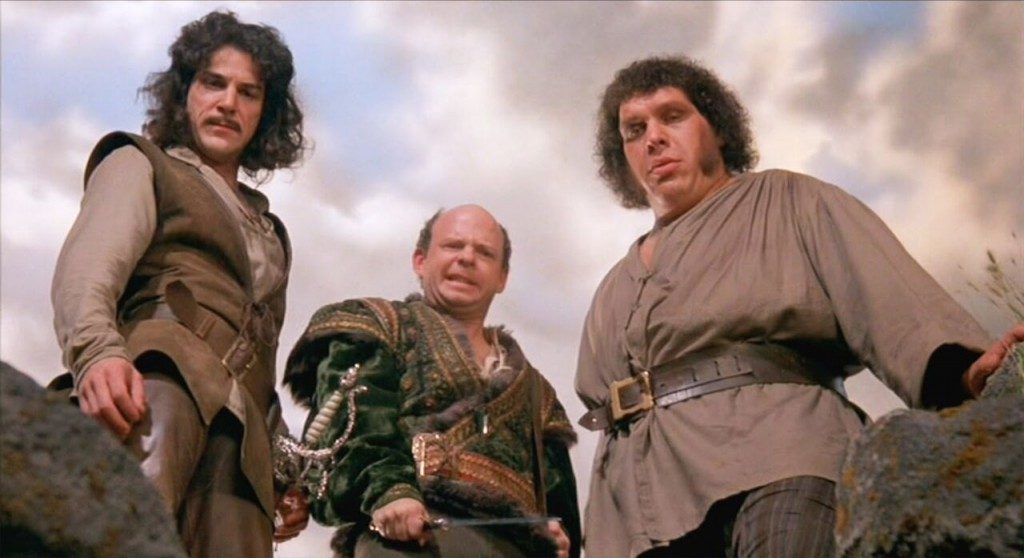
Screenshot from “The Princess Bride” 1987. From left to right, Mandy Patinkin (Inigo), Wallace Shawn (Vizzini), and Andre the Giant (Fezzik). Copyright of Act III Communications.

Hey! Hallie here!

I think it’s safe to say that “The Princess Bride” has shaped most of quarantine so far. Early on we got short, silly, videos of famous actors acting out different scenes from the comfort of their own homes. We have the promise of these scenes all coming together on Quibi soon. (Does anyone even use Quibi though?) Also, as I’m typing this, a virtual script reading of the original movie, starring most of the original cast, is underway in support of the Wisconsin Democrats. I love “The Princess Bride” and I never miss an opportunity to re-watch the movie, especially now when I have a lot of free time on my hands. But recently I came to a shocking realization. There are people who don’t even know “The Princess Bride” was based off of a book. A REALLY good book. So if you haven’t read the book, or didn’t even know the book was a thing, here’s some reasons why you should pick it up right now.

The Same Writer: The late William Goldman is the genius writer responsible for both the original book and the screenplay of the movie. For that reason you won’t miss anything you love from the movie when you read the book. It’s all there, plus more witty dialogue and absolutely hilarious descriptions that you miss when watching the movie. Did you ever think it was weird that at the end of “The Princess Bride” the grandfather reads about all the kisses ranked most passionate? Well that’s because, in the book, there’s a ranking for EVERYTHING. It’s a gimmick that gets so ridiculous you can’t help but laugh. That is just one of many examples of the amazing writing style you miss when you don’t read the book.

The Other Storyline: This is probably the most surprising to people who first open “The Princess Bride”. No, I’m not talking about some small sub-plot. I’m talking about a completely different storyline that runs adjacent to the story of Buttercup, Westley, and Prince Humperdinck. The movie hints at this storyline with the sick boy lying in bed while the grandfather reads “The Princess Bride” to him. In the book however, there’s so much more to it. Your first hint that something is different is that Goldman’s name isn’t the only one on the book. The name of S. Morgenstern appears on every book, with the promise of an abridged version done by William Goldman inside. Does that mean S. Morgenstern is the author? No. S. Morgenstern is a fictitious author, and inside the book you’ll find several introductions and side notes written by William Goldman as a fictitious version of himself. He has several stories to share, including his retelling of how he was introduced to “The Princess Bride”, his father read the book to him while he was sick, and the story of how he tried to get his son obsessed with the book only to realize that chapter two was filled with historical familial records. He even details his own trip to the Cliffs of Insanity. While these are very much fake events, some events read truer, like his time on the movie set that he added into later editions of the book. There are small notes from William Goldman throughout the entire book, and they’re gleefully enjoyable whether true or not.

Character Backstories: In the movie the most complete character backstory we get is Westley’s. Part of this is because his time among pirates and the way he became the Dread Pirate Roberts is explained by Westley himself in the fire swamp. Our other three main characters, Buttercup, Inigo, and Fezzik, all get more backstory in the book. The beginning of the book shows Buttercup’s life, her parents, and the moment that Count Rugen, the six-fingered man, discovered her. The event even ends with her embarrassing first confession of love to Westley. After Westley leaves and she hears news of his death, it doesn’t leave Buttercup’s depression up to the reader to imagine. The book follows Buttercup through every emotion as she loves and loses Westley, and it adds something interesting to her character. As for Inigo and Fezzik, the book actually pauses before each of their fights with Westley to talk about their childhoods. You learn so much more about Inigo’s father and Fezzik’s rough entrance into the world of professional fighting. There’s so much more to learn about the characters, and the book definitely provides answers to questions you may have asked yourself after the movie.

Fezzik: My favorite character in “The Princess Bride” movie has always been Inigo. So when I finished the book and realized Fezzik was my favorite character, I was kind of surprised. Fezzik is great in both versions, don’t get me wrong, but Fezzik is also a largely silent character. That’s where the book has leverage over the movie. The pieces of the book told from Fezzik’s point of view give you insight into his mind. Not only is he more intelligent than Vizzini gives him credit for, he’s also the voice of reason between himself and Inigo. Inigo is quick to go off the rails when something doesn’t go his way, while Fezzik remains calm and collected most of the time. It’s upsetting to discover this adorable character has been holding back his intelligence because he’s been told his entire life that his size is his only feature worth noticing. The movie made me like Fezzik, but the book made me love him, and I think everyone should take the chance to fall in love with this character. (Fun fact: Fezzik was William Goldman’s favorite character as well.)

“Buttercup’s Baby”: “Buttercup’s Baby” was the supposed sequel to “The Princess Bride”. William Goldman expressed both disinterest in writing the full sequel, and then, later on, hinted that he might have written some of it. Given his reputation for joking around, and his untimely death, we’ll never know how serious he was about this sequel. Regardless, the first few chapters of the sequel can be found in the back of the book. It gives you a little bit of insight into what the characters might have been doing at the end of the story, plus even more Fezzik. Also, naturally, some action and chaos. It’s not exactly the happiest of stories, it ends on a cliffhanger, but there’s also a few hilarious and interesting pieces of information given about “Buttercup’s Baby” early on in the book. All I’ll say is there’s a giant bird and a whole lot of William Goldman’s fictional trip to Florin.

And there you have it! Hopefully I’ve convinced you to pick up the book next time you’re in a “The Princess Bride” mood. Which is always. You should always be in the mood for “The Princess Bride”. Let’s be honest, you’ve already watched the movie a million times. Who hasn’t? So go read the book now. You won’t regret it, I promise! Also, when you finish, be sure to give a silent thanks to William Goldman. Not only did he write this amazing story, he also spent YEARS fighting to maintain the rights to it so that he could get the movie made exactly the way he knew it deserved to be made. I think we can all agree it payed off.

Don’t do anything fun until I get back!

Hallie
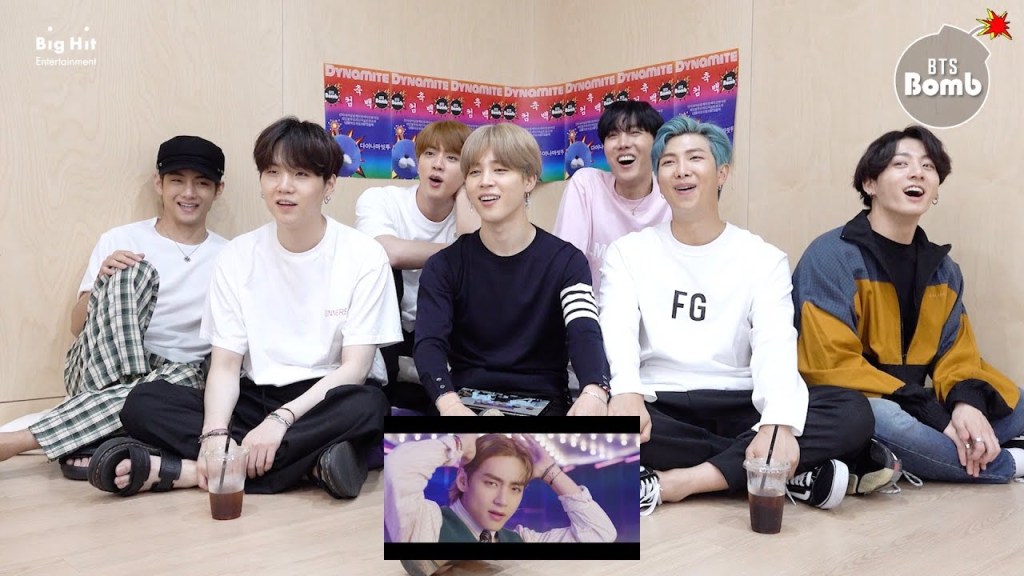
K-pop and K-dramas: But Namjoon

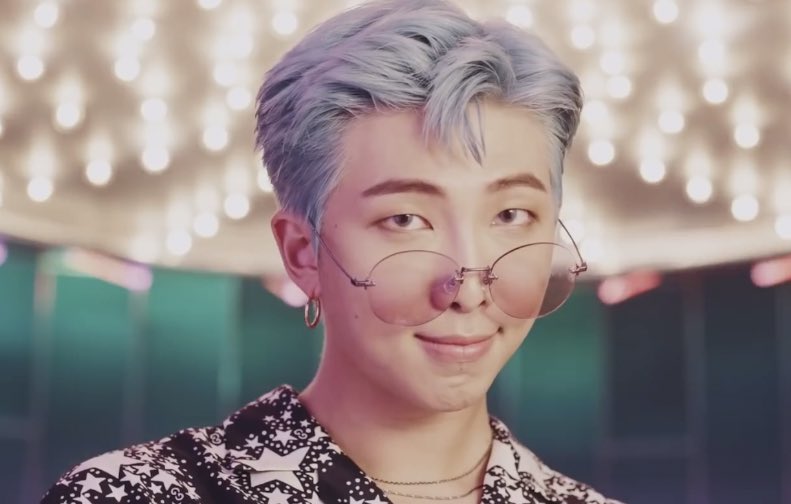
Screenshot of Kim Namjoon from BTS’s ‘Dynamite’ MV on Youtube. Copyright goes to Big Hit Entertainment and BTS.

Hi! It’s Annie!

For those of you who weren’t aware, today, September 12th, is Kim Namjoon’s (RM from BTS) twenty-sixth birthday! What’s funny is that I had the idea for this article a while ago and had no idea I would be posting this on his birthday. For those of you who aren’t too familiar with BTS or the fandoms in the K-Pop world, you might be looking at the title of this article and have no idea what that means. “But Namjoon” is a popular phrase coined in the K-pop world, generally used when a K-pop star says something racist. Many hardcore fans of a K-pop artist who is accused of saying or doing something racist will respond with “But Namjoon” because of a few things that he’s done in the past. If this sounds stupid to you, that’s because it probably is. This phrase was most popular a couple years ago, but recently it has gained traction again for unknown reasons. Namjoon hasn’t done anything of this nature for years, even when the phrase was popular a couple years ago it was entirely targeting things he’s done in the past. Before I go farther into this, I want to mention that this is my perspective on this issue and it’s incredibly important to listen to Black voices and validate what they’re feeling as well. As always, please do some of your own research on this topic as well.

The acts in question:

Namjoon was accused by many people of sexism a while ago when certain people decided to revisit one of BTS’s first popular songs; ‘War of Hormone’. I’m going to be honest here, the song isn’t pretty when it comes to sexist undertones. While most of the song is just sexualizing women in general, there are lyrics like; “Women are like an equation, us guys are the solution”. Not great. However, it’s important to talk about how Namjoon reacted when this song was criticized. He took complete responsibility for the song, confessed that he wrote most of the criticized lyrics, and apologized for them. Then he did the best thing he could have possibly done; he never did it again. Not only that, but he now has women oversee lyrics he writes about women in order to make sure he never does it again. ‘War of Hormone’ is bad, but is the music we generally have in America any better? And have we ever gotten apologies from any American artists about how they sexualized women or promises from them to never do it again? This is the beginning of a much bigger conversation about how women are still portrayed in music in general, but we know that Namjoon and BTS will now be a positive part of that conversation.

Namjoon has said the n-word before. There’s really no getting around that fact. He once said it while covering an American rap song and then he allegedly said it one other time on a live, but I have yet to find definitive proof of that. It may be out there somewhere, I don’t know. I am not a person of color, so I can’t say anything definitively on this situation, all I can talk about is how young Namjoon was and what he’s done to change. Not only has he apologized several times for saying this and never done it again, he also has since worked to remove the Korean word “naega” from all BTS songs even though it is a common referral to oneself in Korean. It is not a racist word, but he has still removed it from every song so that an English speaker won’t misinterpret the word and feel uncomfortable.

So, why are people still using this phrase?

I honestly can’t say. A band like BTS that has such a big fan following are bound to have people that don’t like them too. Maybe people are using this phrase to remind people that the newest artist who does or says something racist can turn themselves around as well. I seriously doubt the last one, as this phrase has a notoriously bad connotation. Mainly I see this as an example of people not allowing others to grow and become better people. It would be very different if Namjoon has never apologized or made any moves to change, but he is an excellent example of someone who has done both and has become infinitely wiser because of it. It’s also important to point out that Namjoon was nineteen or twenty when all of the things I mentioned above happened and his turn around occurred incredibly quickly. Because he listened and checked himself. I’m not a big fan of people actively condemning cancel culture, because we’ve always had some form of cancel culture. It’s not anything new, and lately it’s mostly been used to help move society forward. But we should definitely be careful about making sure we acknowledge the people who do change after they’re called out. We shouldn’t keep bringing up someone’s past mistakes if that’s something they have moved past and are still actively trying to become better because of. If anything this proves that Namjoon is an even better role model. Namjoon has gone from those mistakes to saying things like:

“If you can’t respect, don’t even open your mouth.”

and

“No matter who you are, where you’re from, your skin color, gender identity: speak yourself.”

and

“I believe that there’s no improvement if you have an inferiority complex and victim mentality.”

Of course, I’m biased. Namjoon is amazing and I’m a giant fan of BTS. But things like this make me even more proud to be a fan of BTS. They are excellent examples of people with fame who actually care and have compassion for everyone. Their philanthropy is unmatched, including donating to causes like BLM in countries that aren’t their own. Namjoon is the leader of this amazing group, and rightfully so. He is well-spoken, kind-hearted, and an excellent example of someone who listened and became one of the strongest allies for equality we have. I have an immense love for this band and that definitely includes Kim Namjoon. Happy Birthday, Rapmon!

See you across the pond!

Sincerely, Annie

Video Games: Why “Undertale” is Still Worth Playing

This image has an empty alt attribute; its file name is undertale.jpg
Screenshot from 2015’s “Undertale”. Copyright of Toby Fox.

Hey! Hallie here!

I’m sure many “Undertale” fans already know this, but we’re quickly approaching the game’s 5th anniversary. Amidst all of the announcements I felt it was only right to return to the video game that started my obsession with video games. I had played games before “Undertale”, but “Undertale” made me want to buy an actual game system. I’m completely aware of the various reasons why some have steered away from this game, especially after interacting with some of the more infamous parts of the fan base. But if you’ve let the actions of the worst of the fans steer you away from this amazing game, it may be time to reconsider. Not only are we anticipating more installments to the franchise, but it’s messages are still incredibly valid five years later.

So why should you pick up the game right now?

The Player’s Influence: This is probably what the game is most popular for. This is also probably the hardest piece to explain without any spoilers, and as I’m venturing for this to be a spoiler-free discussion, I won’t give anything away. Just, if you haven’t played the game, PLEASE go in blind. It’s worth it. This game doesn’t have choices like many other player-influenced games, but don’t let that fool you. Your actions do matter, and characters will treat you differently based on how you decide to play. Making a rash decision can start you down a dangerous path, and you’re just as easily able to make enemies as you are friends. The way this game involves the player is so sneakily done that you won’t even notice how much impact you have at first. After you’re a few hours into this game, however, you will absolutely start questioning your morals.

The Characters: The art style of this game is adorable and quite deceptive. The characters may look simple and cute, but there’s much more depth to every character than meets the eye. The game doesn’t even try to hide from you how little you know from appearances. The very first scene of the game the player meets a flower named Flowey. Cute, right? Come back to me after you meet him. Another example is Sans the skeleton. If you know anything about “Undertale”, you know Sans. He’s a squat little skeleton, known for his love of hot dogs and general laziness. But as you get deeper into the game you realize Sans has a much darker side. He’s not someone you want to piss off, and it’s not just because he has a temper. You’ll be rewarded for getting to know these characters and trust me, you’ll need more than one playthrough to learn everything about them.

The Soundtrack: Toby Fox, the creator of the game, also composed the music for the game. He’s unfairly talented. Each new area you enter has it’s own theme to fully immerse you into the new landscape. Snowdin sounds like Christmas. Waterfall’s tinkling notes remind me of rain. The soundtrack blends in so seamlessly with the background that you’ll appreciate it without even noticing it’s there. Each character also has their own theme. The themes match with the character’s personalities so well that I can’t even look at a character without getting their song stuck in my head. If you haven’t listened to any of the soundtrack, at least go listen to “Megalovania”. It absolutely wrecks what you think can be done with the soundtrack of an old-school style video game.

The Humor: This game is hilariously funny. It succeeds impressively at being both dark, and chalk-full of goofiness. Don’t get me wrong, most of the jokes in this are bad jokes. Not slapstick, thankfully, but still bad. But they’re the good kind of bad jokes. The jokes so stupid, you can’t help but laugh. Between Sans’ skeleton puns and Napstablook saying “zzz” out loud to pretend he’s asleep, there’s always something that can make me laugh on bad days. And the best part? The game is completely self aware. It doesn’t aim for comedy that makes you think. It aims for comedy that will make you laugh purely for how magnificently meta and dumb it is.

The Style: I’ve mentioned it’s old school design and cute characters above, but it’s really worth talking about the entire design of this game. The style calls back to old 8-bit games, but with vibrant colors and unique character designs. The color palate is so gorgeous that I legitimately paused for several minutes to stare at the flowers in one of the final rooms. Also, the sheer amount of characters in this game, especially counting the monsters you meet in combat, is impressive, and none look even remotely the same. (Aaron, the horse with both a snake tail and huge muscles, is one of my favorites). Some of the credit for the design goes to Toby Fox, he’s really THAT talented, but some of it also goes to Temmie Chang. Temmie even has her own creature in the game thanks to her contributions. They’re appropriately called Temmie’s and they’re adorable, so keep your eye out for them!

The Gameplay: The gameplay isn’t really what you expect going into it. Each combat round takes you into a separate black and white screen where you face off against monster attacks as, wait for it, your own heart. You can take actions, like telling the monsters a joke, or you can decide to simply fight back. All that while trying to dodge attacks from inside a small, white, box. It doesn’t sound like much, but it’s very fulfilling. The game teaches you how to dodge new attacks as you move along in the story, and eventually you have to learn to react faster and faster as boss battles demand more from you. At times the system can be frustrating, but with enough practice you’ll be proud of what you can accomplish.

These are only a few of my favorite things in the game. Maybe I’ll make a spoilery post down the line to talk about all of the amazing twists and turns that made me love this game. But, for now, I hope I gave you a few good reasons to check this game out. And if you’ve already played “Undertale”, first of all, you have my respect. Secondly, what are you doing here? It’s almost “Undertale”‘s 5th anniversary. Go hang out with Sans at Grillby’s or something!

Don’t do anything fun until I get back!

Hallie

Disney: Mulan (2020)

Screenshot from Mulan (2020) starring Liu Yifei. Copyright of Walt Disney Pictures.

Hi! It’s Annie!

Over the weekend I was surprised by my family with watching this movie right in the middle of deciding whether or not I was going to watch it. I am a giant fan of the original ‘Mulan’ movie, it is quite possibly one of my favorite movies of all time. I also am not at all a fan of Disney feeling the need to do all of these live action reboots. In my opinion, even if they are somewhat enjoyable, they end up feeling useless and lacking in creativity at the end of the day. But that doesn’t even begin to describe where this movie went wrong. There’s a lot wrong about this movie before you even watch it; so in the interest of this review leading to some sort of recommendation on whether or not you should watch this movie, I should mention at least some of the arguments surrounding whether or not this movie deserves a boycott.

The Boycott:

Firstly, Disney jumped through hoops to please the Chinese Communist Party in the making of this movie. It was filmed where there are Muslim concentration camps. You have to go into this movie knowing that many argue that this was meant to be a Chinese propaganda film, not to necessarily express the culture or the people. Pleasing the government is what’s going to make them money, so that’s what they did because that’s what they care about. Liu Yifei and another actor in this film also faced backlash for siding with Beijing against Hong Kong. I’ve heard some people point out that freedom of speech in China as an actor is way different than what people seem to think it is. Actors, especially ones going out into the world to represent China, are often pressured by the government into saying certain things. What she said she stood for wasn’t pretty, but just because she said it doesn’t mean anything in regards to whether or not she actually stands for it. Lastly, I should point out that this film has little to no Asian creatives of any sort behind the scenes. Yes, it’s good that all the actors are Asian, but there were no people actually a part of this culture writing this movie and it shows. Many people worry, when it comes to this film doing badly, that Hollywood will think that this film failing means western audiences aren’t interested in seeing Asian culture. Even if the true case is that the movie was just bad and controversial. All of the things above that I just mentioned are important things to think of before you make the decision on whether or not to spend your money here. I’m going to tell you right now, it probably isn’t worth it. I’m also not the be-all, end-all, of information regarding all of the reasons to boycott this movie, nor am I the first person you should ask about it. Please do your own research and listen to Asian voices regarding this issue.

LIGHT SPOILER WARNING: Not that you’re actually going to watch the movie now that you’ve read the above paragraph.

The Bad:

  • No Mushu. I know a lot of people wanted Mushu in here but I didn’t really see why. I wanted a more realistic approach to the tale of Mulan, so I wasn’t really looking for a Mushu in here. Instead, the fact that Mushu isn’t here is almost baffling. There’s a random Pheonix that appears sometimes and doesn’t have much to do with the story and a shape-shifting bird woman who also doesn’t really make sense in the context of the movie because she’s the only one shown with this ability. They don’t even explore why she has this ability. Literally anything weird about the movie is explained as “chi”. The more they do this, the more you become certain that the writers have absolutely no idea what “chi” even is. This will come up again.
  • Chi. There it is! What the heck is chi in the context of this movie and why is it even there? One of the great things about the character of Mulan in the original movie is that she’s a normal woman learning at the same speed as everyone else and she just wants to save her father. When she progresses or fights well it’s because she shows that women can be just as strong and work just as hard as men do. In this, all of her achievements are attributed to her chi. This is why the movie thinks she’s a good fighter, this is why the movie thinks she’s brave. It’s because she’s some sort of chosen one rather than a strong woman and warrior. This idea of chi is very inconsistent in what it’s actually used for and it isn’t ever explained to the audience either. I will again express my belief that the white writers chose a random Chinese idea that was somewhat popular and wrote it into the script without actually doing research on it first.
  • The westernization. This was so apparent throughout this entire movie. From the way they spoke, to the words they used, to the way the characters acted around each other. Watching this movie was really interesting after having watched so many C-dramas lately that are actually written by Chinese people. Everything here just felt off and I realized that it was because Asian people didn’t actually write this script or the dialogue in it. This movie felt more like it was trying to pander to its western audience than it felt like it was actually trying to teach us anything cultural. Each culture has a different way of communicating. Some cultures are more outgoing than others. Every culture has progressed differently so we’re bound to be different. The way I talk to my friends in public is going to be very different than the way someone half-way around the world talks to their friends in public. Researching and recognizing this before you visit that country, never mind before you make a film about said country, should be common practice as a way to be respectful. I guess that tells you what you need to know about the writers of this movie.
  • The girl power. I am really sick of movies claiming to be feminist and advertising that way, only for them to feel the need to give a woman a reason to be great as if we can’t be on our own. There must be some sort of reason that a woman is more powerful than a man. I already talked about this when I talked about chi, but I want to take a second to talk about the hawk lady. All of Mulan’s conversations with the witch are about how men treat them. Even if it’s supposed to draw attention to the inequality of the time, it also means that this movie fails to pass the Bechdel test. This movie that was advertised as feminist doesn’t pass the Bechdel test even though they put another female character in this movie specifically for Mulan to talk to. I’m not saying that every film that passes the Bechdel test is great for women, or every film that doesn’t is horrible. The original ‘Mulan’ doesn’t pass the Bechdel test. But the original ‘Mulan’ doesn’t largely because Mulan spends most of the movie surrounded by men while pretending to be a man. This movie doesn’t have that excuse because they added in this new character. And when the witch woman dies, it isn’t emotional because she dies for the sake of woman-kind rather than the movie actually taking a moment to give her some sort of personality trait that isn’t just “feminist”. We want multi-dimensional characters for women! Them being only “feminist” and nothing else isn’t going to cut it!
  • The side characters. Everyone but maybe Mulan and her father are one-dimensional. The movie doesn’t know what to spend time on, so it goes off on several tangents and basically leaves all of its side characters to rot. They might as well have all had the same personality because there was no depth or exploration of the characters to be had here.
  • Same plot. The base plot of this movie is exactly the same as the original movie. They didn’t even try to really change it too much, and it leaves you sitting there wondering why you’re watching the movie. The original animated ‘Mulan’ does this plot so much better, so if you’re going to watch what’s virtually the same plot you might as well turn this off and watch the other ‘Mulan’ that’s also on Disney Plus. If you’re interested in watching a more culturally accurate version of ‘Mulan’, there are many adaptations to choose from that were actually made in China and created by Asians. This movie is a very useless watch.

The Good:

  • The imagery. If this movie has nothing else, you can at least say that it’s beautiful. Many of the scenes feel like paintings and the movie itself is shot very well. It’s very pretty to look at while you aren’t enjoying it that much.
  • The acting. For the very little that each actor was given character-wise, each actor manages to stand out in some way. Every actor gives a piece of themselves to their performance and does an excellent job at doing so. The acting is charismatic, fun to watch, and makes you wish that the movie was better so the actors would have been given proper material to work with. They carry the movie on their backs and each and every one of them deserved so much better writing than what they got.
  • The swordsmanship. There is a specific scene where actor Donnie Yen is moving so fast with his sword that they had to shoot the scene in slow motion. It was one of the most beautiful scenes in the entire movie. If you can find that scene by itself on Youtube or something, it is definitely worth the watch.
  • No Li Shang. Don’t get me wrong, I love Li Shang. He is one of my favorite Disney characters of all time, but there is nothing he would have been able to do for this movie. There is another character they have as Mulan’s love interest that fits the narrative much better, and really makes you wonder what would have happened if the writing was better and he was given more to work with as a character. Disney cited the reasons for taking Li Shang out as not wanting Mulan to have a romantic relationship with an unbalanced power dynamic. I actually really respect this decision. If only they could have done more with the new character and this movie in general.

So, is it good?

No, not really. You probably could tell from what I wrote about the good in this movie that I didn’t like it that much. There’s really not much to say here. There’s so much rightful backlash about this movie and really, it makes you wonder what would happen if we actually had a more diverse Hollywood. Also, if it was more popular and normalized to watch movies and content that are made in other countries. When it comes to our media in America, we can be really self-centered. I didn’t have high expectations for this movie, because I really don’t for any Disney live-action films. I’m just going to tell you to skip it and not pay the ridiculous thirty dollars. Watch the original again or watch an adaptation of it from China. Both experiences would probably be much better. Disney is coming out with ‘Raya and the Last Dragon’ next year and that actually has many Asian creatives working behind the scenes on it. Hopefully that will be better, especially because it’s an original idea. (And YAY Kelly Marie Tran!) And can we stop with the live action remakes? Please???

See you across the pond!

Sincerely, Annie

Twins in Media: The Parent Trap (1961)

Screenshot from “The Parent Trap” (1961), starring Hayley Mills. Copyright of Walt Disney Productions.

Hey! Hallie here!

If we’re going to talk about “The Parent Trap” we need to talk about the original movie. I’d heard a lot about this movie going into it. This definitely isn’t the first adaptation of this story. There are so many versions. SO MANY. But this is the one that the Lindsay Lohan version remade, and the one that popularized the song “Let’s Get Together”. The story of this one is pretty much the same as the Lindsay Lohan movie with only slight differences. However, most of these differences come from the twins, in this Sharon and Susie, and the way they’re portrayed. So let’s look into these girls and see how they hold up next to their 1998 counterparts.

The Bad:

  • Same actress. This trend is always going to bug me, but I don’t think it’s ever bothered me as much as it did in this movie. It can’t be stressed enough that twins don’t look exactly the same. Not even identical ones. So not only is one actress playing two characters instantly eyebrow raising for me, but it puts a major responsibility on the shoulders of the actress, director, and even writers. How do you make sure the audience can tell the difference between these two characters? Well, in this movie, they can’t. At the beginning of the movie it’s stressed that Sharon speaks and holds herself more properly as a result of her upbringing, while Susie uses more slang and bites her nails. That’s something to work with! Unfortunately, their speech patterns and mannerisms are lost as the movie goes on. The actress acts like the same person in both roles, and even has a constant habit of licking and biting her bottom lip that is prevalent in the film regardless of which character she’s playing. There’s even one scene where both twins are sitting on a bed and one starts biting her nails, only for someone to refer to her as Sharon. So apparently both Sharon AND Susie bite their nails now. Needless to say, I was very confused. As you can probably tell, this bothered me a lot, but I’ll stop ranting and move on.
  • Impersonation. This is going to be the same in both movies because it’s the whole idea behind the movie’s plot. I can count on one hand the amount of twins I know who pulled this move on purpose. The reason twins don’t really do this is because most twins aren’t separated at birth. Surprising right? We don’t really have the opportunity to switch places in any sort of satisfying way. We’re too busy spending most of our time trying to help people tell us apart so we can be seen as individual people. Trust me, most twins would find more satisfaction in you knowing the difference between them than they would in pranking you by pretending to be their sibling.
  • Different but the same. This trope kind of does the same thing as the Separated at Birth trope in this movie. Both use extremes to try to highlight the differences between the twins. I have such a love/hate relationship with this trope. It is very effective at making the twins completely different characters, but takes everything way too far. The twins must have completely different tastes in everything for their differences to be obvious. My sister and I have very different personalities, but also enjoy a lot of the same things. The remake avoids this trope by showing that both girls have similar interests while at camp. In this movie they only share an interest in pranks.
  • Mischievous twins. This one hits a bit harder than the Lindsay Lohan remake. The personalities of the twins are dropped about halfway through this movie in favor of giving the parents more screen time. Because of that, being mischievous actually does become both of their personalities. Suddenly their characters are only fun because they’re twins and tricking their parents, not because of the individual traits that were brought up earlier in the movie. It had potential at the beginning at least.
  • Psychic connection. At the beginning of this movie there’s a whole scene where Sharon says her mom tells her she’s psychic because she gets goosebumps when something big is about to happen. After that happens, both Sharon and Susie get goosebumps at the same time. Ummm no. Just no. That’s all I have to say about that.

The Good:

  • Not the same person. I mentioned some of the tropes they accidentally fall into while attempting this, but I can’t deny that it’s here. Sharon and Susie are presented as two very different people. Two people so different that they don’t get along at first. They come from different areas, have different definitions of what’s fun or what’s polite, and don’t have the same tastes. Susie has a moment where she’s trying to explain her favorite stars to Sharon, and Sharon hasn’t even heard of them. (As a side note, Sharon is from Boston in this adaptation and she’s treated like she lives under a rock, which I found kind of hilarious.) I’ll give credit where credit is due. Creating two distinct characters for twins instead of one is always a major plus.
  • Observant housekeeper. So the parents are as bad as ever in this version and the Grandfather only realizes something is wrong after listening in on Sharon and Susie’s phone call. Not great. Verbena, however, is a gem. Verbena is the original Chessy, and she is just as observant of a character. When Sharon pretends to be Susie and becomes instantly distant from Verbina, she not only notices, but also notices her change in personality. Verbina figures out the difference because she knows the difference, and for that she gets my respect.
  • Different lives. Welcome to another plus of the Separated at Birth trope. Susie and Sharon have different people in their lives who they care about in different ways. They don’t even make the same friends at camp. It’s pretty much the same as the 1998 movie, but I appreciate it anyway. This coming from a twin who is in the same friend group as my sister and chose the same college major for the last two years of college, we STILL don’t live the same life. We have different relationships with our friends and different goals we want to reach. It’s nice to see that twin characters can have different goals and relationships, even if it’s within the most extreme situation you could possibly imagine.

So how do Susie and Sharon hold up? They kind of hang out in the middle. The tropes that they suffer from aren’t great, but they aren’t as harmful as some other tropes we’ve covered before. The intent to write two separate characters is there and appreciated. I did list more bad traits than good, but there’s nothing about them I find as offensive as how the actress portrayed the two, which is more inconsistent than bad. They aren’t anywhere near a great representation of twins, but I appreciate that this movie set a precedent for future movies of the same nature. I’ve seen Separated at Birth done as a story about two people who coincidentally have the same lives because Twins! and Fate! but “The Parent Trap” has made this content less popular. For that I’m grateful.

Don’t do anything fun until I get back!

Hallie
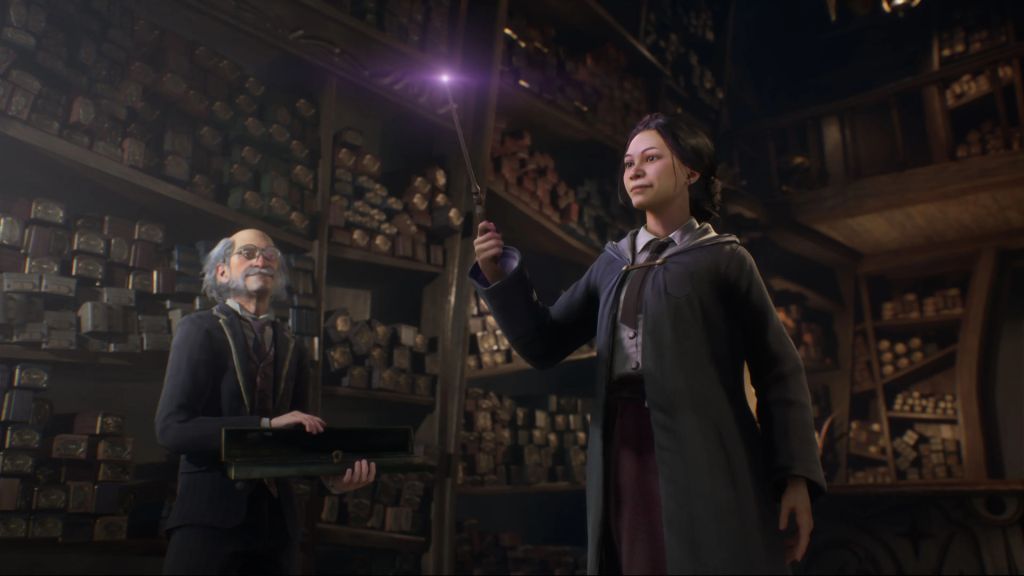
Twins in Media: The Parent Trap (1998)

Screenshot from “The Parent Trap” (1998), starring Lindsay Lohan. Copyright of Walt Disney Pictures.

Hi! It’s Annie!

To continue on our ‘Twins in Media’ venture, my sister and I thought it only right to go back to our namesake. We spent the weekend watching both ‘Parent Trap’ movies so we could examine what both movies did for and against twins in media. Besides this film being the far superior of the two, it was also a little better at the portrayal of twins on the whole. There’s really a lot to unpack here, and rightly so. This movie is quite possibly the most popular depiction of twins to ever have been in media. Let’s figure out if Annie and Hallie are actually good representations of twins in media, shall we?

The Bad:

  • Impersonation. This is what the entire movie is about, and really it’s no surprise. The public has been fascinated for as long as I can remember about the prospect of twins switching places. Are you not good at math but your twin is? Have her take your test instead! I know I’ve mentioned it before, but this doesn’t happen regularly. My sister and I have actually never done it. But I’ll give it points for having them switch for reasons that aren’t mischievous.
  • Mischievous twins. That brings me to this trope. While they don’t switch places to play pranks on people, they still both play a lot of pranks. The first part of this movie is mostly made up of them playing pranks on each other. However, this is not by any means a main personality trait for either girl.
  • Same actor. This is one of the biggest issues I have with all of these movies. Either fraternal or identical, all twins have differences. My sister and I are fraternal, but we are told we look identical. We can personally see the differences, and all of the people in our lives who are close to us can also easily tell us apart from certain facial differences, our habits, our postures, and the way that we speak. Our tones and voices are completely different. You can’t capture all of that at all when only one actress is playing two roles. There may never be a pair of twins who look one hundred percent alike, so it would be nice if media would stop casting the same actor as two different characters and instead cast actual twins or at least two people who look somewhat alike.
  • Oblivious parents. There are instances where one of my parents is looking in the other direction and I accidentally say something that sounds kind of like my sister, so there’s a moment of confusion. It barely happens and it never happens if my parents are looking straight at us. Most parents of twins have identifiers to tell a pair of twins apart even when they’re babies. The fact that neither of the parents figured it out at all is absolutely awful. It feels like neither parent is actually that close to either child and they treat the two like they’re a reversible sweater. It’s really simple, if the parents can’t even tell their twins apart, they probably aren’t great parents. At least the Dad has a moment where he actually figures out which one is Hallie in a scene where she is wearing orange and Annie is wearing pink, as Hallie is seen to wear warmer colors than Annie. But he immediately second guesses himself, so it really isn’t that much to be proud of. Also, the fact that they separated the siblings at birth and never told them they had a sister is also kind of a dick move.
  • Separated at birth. It’s become a common trend that only twins that have been separated at birth have different personalities. I mean, props to them for being different characters. I just want to point out that most twins are different people while having stayed in the same household their entire lives.

The Good:

  • Similar and different. This is one of those rare occasions where a pair of twins is not portrayed as exactly the same or exactly the opposite. A great example is that both sisters have a liking and a talent for fencing and playing poker; but Annie is a much better fencer than Hallie is while Hallie is much better at playing poker than Annie is. They like similar things but they have separate talents. This also comes across when the movie is explaining their different personality traits to the audience visually. Hallie is shown to be adventurous, sarcastic, and more stubborn. Annie is responsible, proper, and anxious. Hallie has mid-length hair and wears earrings while Annie has longer hair and wears headbands. None of the things that I just mentioned are exactly the same or exactly the opposites of each other. They just have different personality traits, and that’s amazing! They are different people who both enjoy oreos and peanut butter. They aren’t ever presented as one half to a whole; they are each their own whole.
  • Observant family. So the parents in this movie aren’t great. But Martin the butler, Chessy the chef, and the Grandfather are all amazing family to these girls. While the parents don’t suspect anything, these three are quick to figure out that something is wrong. Chessy even has a list of things she noticed that were off and mentions them to Annie while she is impersonating Hallie. (Can we also talk about how the Dad should have broken up with Meredith the moment she bought a bell to summon Chessy with?) It is extremely clear in this film that Martin and Chessy know more about Hallie and Annie than the parents do. Chessy knows what Hallie likes to eat and Martin has a special complicated handshake that he does with Annie. These two are gold and the true parents of Hallie and Annie. Martin and Chessy deserve each other in the best way possible.
  • Different lives. They have different goals, different people they care about, and different friends. Even when they go to camp, they each make a different set of friends. My sister and I do have a lot of the same friends, but we have different relationships with them and there are some people that one of us is closer to than the other. Our relationships with anyone aren’t going to be exactly the same. They do this with the members of the family as well. Annie’s relationship with Martin, her Mom, and her Grandfather, are portrayed as different than when Hallie is impersonating her sister. The same goes the other way around. Twins have different lives and different relationships with people, even if it’s the same person. This was really good at exploring that.
  • The actor depiction. Even though I’m not a huge fan of casting the same person as two people, I will admit that this is one of the best times I’ve seen it done. Lindsay Lohan gave Annie and Hallie different ways of talking both in tone and pitch. Each character has their own set of habits, and they don’t do exactly the same thing. It isn’t perfect, but an attempt is made and is as successful as it can be.
  • No twin personality meld. I also see this happen a lot. Sometimes a pair of twins in media will act separately while apart, but once the movie gets them together they will pretty much be the same person. This movie was really careful at keeping Hallie and Annie separate people unless they were trying to come across as unidentifiable for the plot.
  • I am me. When their Mom finds out that Hallie had been pretending to be Annie this entire time, Hallie immediately tells her Mom that she wants to be loved as Hallie and not as her sister. Little moments like this that remind the audience that they are different people are really important, especially in movies like this that can easily fall too deep into what the public wants to see about twins instead of how twins actually are in real life.

So, are Hallie and Annie a good representation of twins in media or not?

Surprisingly, I’m going to go with yes for the most part. Don’t get me wrong, there are still things I don’t like at all about this portrayal of twins in media. I am really getting tired of one actor playing two different roles just because the roles are twins, and it still happens so much. I didn’t even get into how the popularization of movies like this perpetuate same-sex fraternal twin erasure in media. But, what this movie does well, it does really well. This movie is very nostalgic for both me and my sister and watching it again reminded me of how much I truly do love this movie. This is not a perfect movie for twin representation, but I honestly don’t think there is a really good representation of same-sex twins in media yet. At least, not that I’ve seen. As far as same-sex twins go, this is one of the best examples of at least semi-good representation that we have.

See you across the pond!

Sincerely, Annie

C-Dramas: How “The Untamed” Improved Upon the Novel

Screenshot from “The Untamed” on Netflix, starring Wang Yibo (left) and Xiao Zhan (right). Copyright of Tencent Penguin Pictures and New Style Media.

Hey! Hallie here!

“The Untamed” has become one of the biggest bingeable shows on Netflix during quarantine. It’s also completely deserving of it’s popularity. The acting, writing, and amazing lead couple have made “The Untamed” my new favorite show of all time. It inspired me not only to re-watch all fifty episodes immediately after I finished watching them the first time, but also to consume whatever other versions of this story I could get my hands on. This, of course, led me to the original novel, “Mo Dao Zu Shi” by Mo Xiang Tong Xiu. After reading this novel I came to a conclusion that is likely not very popular: The series is better. I’m not saying the novel is bad by any means, but I definitely have a few thoughts I want to single out that struck me while reading. So SPOILERS if you haven’t read the novel or watched “The Untamed”.

The Flashbacks: In Mo Dao Zu Shi the flashbacks are sprinkled around the book. Whenever a character requires knowledge from the past, the book takes a moment to fill you in so you aren’t lost when the past events start becoming important to the plot. The character that is most affected by this arrangement of the story is none other than our main villain, Jin Guangyao. Jin Guangyao is introduced early in the book, but not in the way we see him in the series. Instead, he’s introduced when Wei Wuxian, still posing as Mo Xuanyu, accompanies the Lan sect to Carp Tower. We meet him when he’s already Chief Cultivator. For those who are confused, yes, this is something that happens towards the end of “The Untamed”. It is only when Wei Wuxian performs empathy on the disembodied head of Nie Mingjue, connecting with his memories, that we get any sort of backstory for Jin Guangyao and his connections to any of the other characters. I personally feel his character suffered for it. Instead of seeing this seemingly kind man be mistreated, become close with Lan Xichen, and win over the trust of even Wei Wuxian, we get a huge info dump about his past. While I do believe there are certain past events that can be held from the audience until the last moment, the character development of your main villain doesn’t strike me as one of them. This is not the only example. Other characters and pieces of important information are dumped on the reader without the narrative taking time to allow the reader to get to know them (*cough* The Xingchen and Xue Yang plot *cough*). “The Untamed” has thirty three episodes dedicated to piecing together all of the flashbacks, presenting the entire story of Wei Wuxian before his untimely death. This allows the audience to create personal ties with the characters and become emotionally invested before we see any of the major reveals that come with Wei Wuxian returning to life. For this, I think “The Untamed” handled the arrangement of the story better.

Female Representation: Given that the novel is longer than the series (113 chapters) you would think that the female characters have more to them there than in “The Untamed”. Nope. My biggest gripe with the book is it’s refusal to explore it’s female characters. In the book Yanli is hardly ever present. She maybe gets three scenes. Her only big moments are defending Wei Wuxian from Jin Zixun’s arrogance during the Night Hunt on Phoenix Mountain, and pushing Wei Wuxian out of the way of a killing blow, taking it herself. We see both of these in “The Untamed”, but we also get her appearance at both Gusu and Lotus Pier during it’s attack, giving her so much more depth and character. Wen Qing is also given a much larger role than she serves in the book. This role was initially met with backlash coming from those concerned that she was to be the new love interest for Wei Wuxian. I understand the concern. I really do. Implying Wei Wuxian could be interested in anyone but Lan Wangji is blasphemy. But I appreciate what they did with her character in “The Untamed”. They introduce her in Gusu, way at the beginning of the series, and she is present whenever the Wen clan is plotting it’s evil schemes. She even helps Wei Wuxian when he’s attempting to care for Lan Wangji’s broken leg. In the novel she is only introduced when Jiang Cheng is recovering from the attack on Lotus Pier, which is quite far into the book. You get her involvement in giving Wei Wuxian’s golden core to his brother, as well as her importance in Burial Mounds, but her time in the book isn’t lengthy. The only female characters that really stay the same between the novel and series are Mianmian, Madame Yu, and Wang Lingjiao. They are also, unfortunately, some of the least explored characters in “The Untamed”.

Wei Wuxian’s Innocence: If you’ve watched “The Untamed” there probably isn’t any doubt in your mind. The death of Jin Zixuan is not Wei Wuxian’s fault. In fact, we get the reveal that Su She had learned to use demonic cultivation to mess with Wei Wuxian’s abilities during both the battle that killed Jin Zixuan and the massacre at Nightless City. In the book this doesn’t happen. Jin Zixuan is killed by Wen Ning when Wei Wuxian becomes angry and loses control. Simple as that. However, the book STILL argues that these events aren’t his fault. One of the major reveals at the end of both the novel and the series is that Su She cast the hundred holes curse on Jin Zixun (Not to be confused with Jin Zixuan), a nasty curse that eventually causes your internal organs to fall out of the holes in your body. This is the event that caused Jin Zixun to attempt to kill Wei Wuxian. It is also revealed that Jin Guangyao convinced Jin Zixuan to go after Jin Zixun in the hopes that his interference would result in Jin Zixuan’s death. These alone seem to clear Wei Wuxian from the crime of killing his nephew’s father, and Jin Ling even becomes angry at Su She and Jin Guangyao in place of being angry at Wei Wuxian. Though these things are troubling, Wei Wuxian is truly the one responsible for killing Jin Zixuan, especially after Jin Zixuan had already attempted to de-escalate the situation. This frustrated me specifically because the book handles the massacre at Nightless City so well without shifting the blame off of Wei Wuxian. Wei Wuxian is confronted by cultivators that lost their families to Wei Wuxian’s loss of control, and Wei Wuxian not only doesn’t deny his involvement, but points out that he has already suffered and lost everything in return. In the very least “The Untamed” commits to proving his innocence in both instances.

The Relationship Between Wei Wuxian and Lan Wangji: Unsurprisingly, I’m not a fan of Chinese censorship. Especially in instances where a LGBTQ+ relationship is denied to an audience. However, I have found that the writers of C-dramas based on BL novels have gotten admirably creative while walking around Chinese censorship laws. “The Untamed” is no exception. Partly because of the amazing acting from Wang Yibo and Xiao Zhan and partly because of some amazing writing, it is obvious how these characters feel about each other without having to see them kiss. Their interactions are sweet and swoon-worthy in the way that they care for each other. The novel doesn’t need to worry so much about Chinese censorship. So yes, we have full romance scenes, including some sex scenes. I’m not criticizing the fact that these scenes exist. My criticism is that these scenes muddy their relationship. Firstly, their first kiss in non-consensual. Wei Wuxian is blindfolded and finds himself pressed up against a tree, making out with someone he can’t see. While we know that its Lan Wangji later, neither the reader, nor Wei Wuxian, knows it’s him at that point (Though it’s kind of obvious). Second, their first time is also non-consensual. While Lan Wangji is the aggressor in that situation, not allowing Wei Wuxian to leave even after he attempts to multiple times, Lan Wangji is also soooo drunk. I won’t talk about the nuances in each scene or the cultural differences because people more knowledgeable than me have made lengthy posts on that. I will only say that these are way too big of events for consent to be completely shirked off like that. And these two really need a safe-word.

So these are the main differences that make “The Untamed”, in my opinion, better than the original novel. I still enjoy the novel, obviously. How could I not? The novel has an incredible story and characters that “The Untamed” stays very true to. But along the way I think that “The Untamed” made some smart decisions that elevated it just a bit higher. Regardless of which form of the story you prefer, we can all agree that it won’t be leaving our minds any time soon.

Don’t do anything fun until I get back!

Hallie
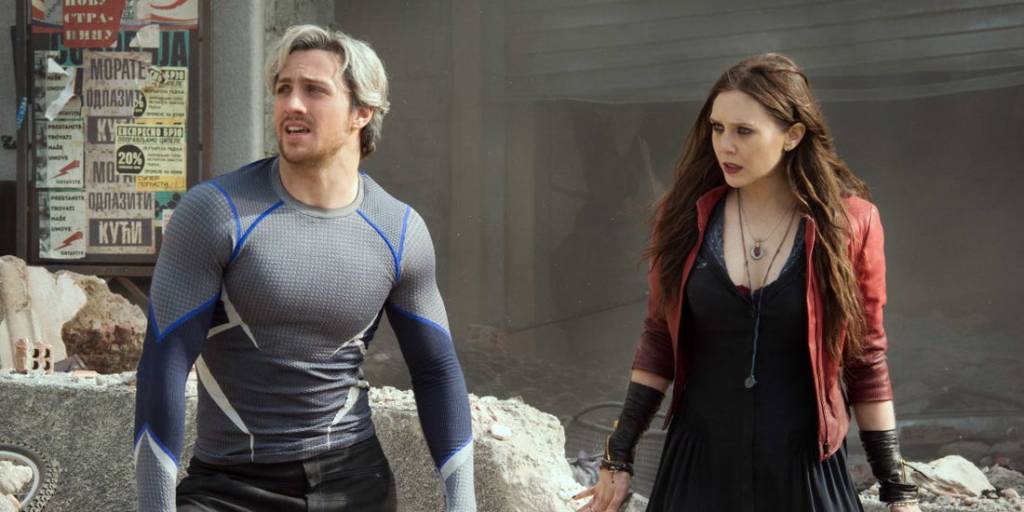
C-Dramas: Love O2O

Screenshot from ‘Love O2O’ (2016) starring Zheng Shuang and Yang Yang. Copyright of Gcoo Entertainment.

Hi! It’s Annie!

Just like everyone else, I am incredibly bored in quarantine. One of my life-lines has been catching up on as much K-dramas and C-dramas as I possibly can, which eventually brought me to this pick partly because of the convenience of it being on Netflix. I just have a lot of thoughts on this particular drama. This drama follows Weiwei, a girl who plays an online game where marriage is one of the central elements. After falling in love with someone in the game, the two decide to meet only for her to find out the guy she married in the game is the most popular guy on her college campus, Xiao Nai. It’s over-all a cute story, and if you are familiar with online RPGs at all, you’re bound to find something familiar. But more so than that I found it so weird, in both pleasant and unpleasant ways, that I just had to talk about it.

LIGHT SPOILER WARNING: If you have not watched this show and plan to, maybe don’t read the rest of this erm… review. If you are on the fence about whether or not to watch it, I say watch it. It’s just cute and weird enough to keep you entertained. If you don’t care at all; read as much as you want.

The Pleasant:

  • The Main Female Protagonist: I find myself often disappointed in many romcom dramas in general when it comes to the main female character. For a lot of dramas, the female character is entirely not the focus. Because of the demographic of people watching being mostly female, the drama focuses more on developing a hot boyfriend than it does on developing their female protagonist. I was really happy to see that this wasn’t the case here. Weiwei is opinionated, sassy, and incredibly capable. What’s more, she’s also a Computer Programming major, which is a very male dominated field. When she feels someone has done something wrong, she confronts them about it. She actually communicates instead of running away all the time. I do feel this drama had a little trouble with her personality as it got deeper into the romantic relationship aspects of it. She had a case of being inconsistently sassy. But I’m glad to say that, for the most part, she was a realistic female character and very fun to watch.
  • The Trust: This was so important for me! Most romcom dramas depict their couples breaking up several times over, often due to a lack of communication over something involving one of the characters getting jealous after seeing their partner with someone else. Every time I thought they were going to do that in this, they completely side-stepped it. There was a moment where one of the antagonists called up Xiao Nai to show him “proof” that Weiwei was cheating on him and he completely refused to see it. When she tracked him down and showed it to him, he told her that he didn’t want a third party interfering in his relationship. Later he hacked into her phone and deleted it, and when Weiwei asked him what he was doing he said “Deleting trash” and then showed Weiwei the video so they could plan their next steps. When he was asked later why he immediately didn’t believe the video, he simply stated that she’s his girlfriend and he trusts her. I will admit that they go slightly too far on this point when the two characters talk about cheating, but the thought is there. It is so rare for trust to be present in a relationship in so many romance dramas and I’m so glad that they emphasized the trust in this relationship.
  • The Friendships: I have not seen many dramas where the friendships are this realistic. There is a scene where Xiao Nai is treating Weiwei and all her friends to dinner and after she tells them not to order too much food, they promptly tell him that the last time they went out Weiwei downed an entire plate of chicken wings. I laughed because this is definitely something I could see a friend doing to me or something I would do to a friend. The friendships here are not depicted as fake and they actually do depict people going through struggles in their relationships with each other. They tease each other, they talk about people they find attractive in a teasing way rather than in that fake serious way, they’re constantly snacking, and they also get into disagreements and fight. There is definitely a friendship focus here for both the guys and the girls and it’s just so fun to watch because it reminds you of your favorite moments with your friends.
  • One of the Sub-Plot Romances: There is a gay couple in this show and it completely caught me off guard. I shipped it from the beginning, but I was sure that they were going to explain it away as a strong friendship or a brotherly bond. That is not what happened. It is not super explicit due to Chinese censorship, but it is not as subtle as you might think either. There are hints sprinkled throughout the show that these characters are gay and eventually they hit you with this giant revelation about something that happened between them in the past that confirms it. Their faces when they figure it out are worth watching the entire show to see. The two characters move in together by the time it ends and the line “We all look hungry for the food, but you look hungry for the chef”, also shockingly made it past the censors. This relationship is my favorite in the entire show, you just can’t help but love it.

The Unpleasant (Or Just Weird):

  • The Main Male Protagonist: Before anyone who likes this show or just really likes Yang Yang gets mad at me, I just want to say that I didn’t completely dislike his character in the least. Firstly, I want to say that Yang Yang is an incredible actor and, yes, also incredibly attractive. I just think he suffers from what a lot of romcom boyfriends suffer from, which is perfect boyfriend syndrome. The narrative refuses to believe that he has many flaws, and definitely not big flaws, so he doesn’t really make mistakes and learn from them or do a whole lot of developing. This show really wants his only flaw to be that he’s anti-social, but I’m not sure that’s necessarily a flaw without other things on top of it and he doesn’t really overcome it. Not only that, but I personally believe he had flaws in other instances where the narrative was telling you that he’s perfect. Don’t get me wrong, he’s charming and some of this could be personal preference, but I do have some issues. He’s constantly telling the main character that she shouldn’t do certain things or he may not be able to “control himself”. I’m immediately skeptical when the consent of another character comes into question. There’s also the fact that he’s always one step ahead of the relationship without telling her or getting her permission. He thinks they’re dating when they meet because of their status in the game. He then begins introducing her as his fiancee before he ever proposes to her. If you can picture someone who you wouldn’t at all be interested in doing something like that and find it creepy, than it is automatically creepy when a hot guy does it too.
  • The Game: The entire marriage and dating aspect of this game was really just weird to me. They reminded me a lot of when I used to play online RPGs when I was in my tweens and people would start “dating” on those websites. It was always really awkward when you walked into a room in the game and you saw that people were asking each other out or breaking up in the web-chat. But most of the people playing those games were either in their early teens or about to be in their early teens. It was so weird to watch this with the knowledge that it was actual adults in college doing that. I’m not saying that it’s an inherently bad thing, but it was definitely a weird part of the story for me. Especially because of the aspect of the story where people, not just the main male character, thought that dating in the game automatically translated into dating in real life even though they really didn’t know anything about the other person. That just didn’t sit right with me. The game also pretty much disappears about half way through the show, so the consistency when it came to the game was a little off.
  • The Other Sub-Plot Romance: The romance plot between Weiwei’s best friend and the Foreign Languages major was not at all good. Mostly because, even when the best friend character got kind of annoying, she was still way better than the guy in this relationship was. This guy first goes after Weiwei and won’t take no for an answer. He then makes several other bad decisions and is just a cocky douchebag for the rest of the show and never apologizes for it. He is told time and time again to apologize for his actions, which he never does to the point where you start to wonder whether or not the writers forgot. Weiwei straight up tells him in one of the final episodes that she doesn’t like him. There is really no getting behind this romance.
  • The Relatability: You would think that this romance would have several relatable factors when it comes to the main character. She’s a gamer, a computer major, and she has a close knit group of friends. But this romance takes place between the runner up for prettiest girl in the school who gets a lot of money from babysitting a rich kid and the rich CEO of his own company. Both of these characters are extremely privileged. They also do try to pull some of the “not-like-other-girls” scenarios with the main character, meaning that they do demonize and push down many other females in the show. Especially female gamers. If you want to find a main character to relate to, you’re probably not going to find it here.
  • The Kissing: I just have to add this here. Why is it seen as attractive for the woman in the relationship to know so little about romance that she doesn’t do anything? She doesn’t instigate anything and, worse, the kissing looks like some sort of hostage situation. Her eyes are open and she’s standing stiff as a board. At that point you aren’t watching anything romantic; you just feel concerned that this was something she didn’t want or consent to.

Over-all, I actually liked this show for the most part. It was an entertaining watch while I’m bored in quarantine. Is it the best show ever? No. Am I going to watch it again? Probably not. Would I recommend it? Maybe to some people. But, if anything, this drama is entertaining and not super long either. It’s an easy watch when you’re feeling bored and it’s fun to watch and sometimes poke fun at too. Do I wish it was better? Yes; but sometimes you’re just in the mood to watch something lighthearted and a little bit stupid. It’s a nice distraction.

Se you across the pond!

Sincerely, Annie